
In today’s competitive grocery landscape, freshness isn’t just important—it’s everything. Longer-lasting produce means less waste, lower costs, and happier customers.
To tackle this challenge, Biozone Scientific partnered with a commercial retailer to test how Icezone’s Photoplasma™ technology could extend the shelf life of fresh produce.
Why Fresh Produce Spoils So Quickly
Fresh produce is highly susceptible to mold, bacteria, and natural deterioration during storage and display. Even under refrigeration, fruits and vegetables continue to age, and environmental factors such as humidity, temperature fluctuations, and microbial contamination can accelerate spoilage.
For retailers, this often leads to increased waste, reduced profitability, and shorter selling windows. Extending produce shelf life can help businesses improve inventory management, reduce losses, and provide customers with fresher products.
The Problem
Items like strawberries, raspberries, and asparagus are especially vulnerable to mold and bacteria, particularly in humid refrigeration environments. Even with standard cooling, retailers were still seeing significant spoilage, leading to lost revenue and unnecessary waste.
The Solution
In simple terms, it works continuously in the background to slow down the growth of mold and bacteria, helping produce stay fresher for longer without chemicals or extra handling.
The Results
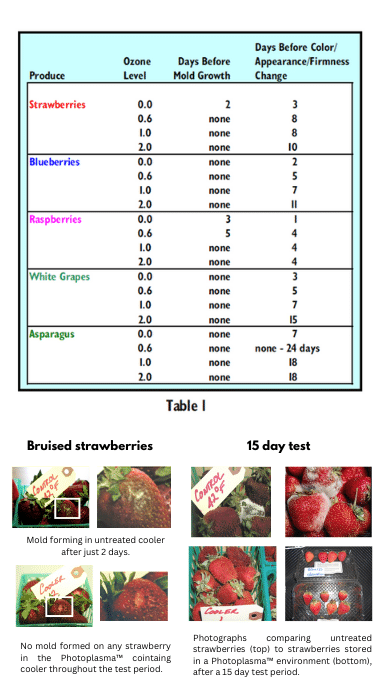
Dramatically less mold
Longer shelf life
Real business impact
Less spoilage = significant cost savings
Quick-Fire Questions
How can retailers extend produce shelf life?
Maintaining stable refrigeration conditions, controlling microbial growth, and reducing environmental stress can help extend the shelf life of fresh produce.
What causes fresh produce to spoil?
Produce spoilage is often caused by mold, bacteria, moisture, temperature fluctuations, and natural aging processes.
How can grocery stores reduce produce waste?
Reducing spoilage through better refrigeration management and shelf-life extension technologies can help lower waste levels and improve profitability.
Which fruits and vegetables benefit most from shelf-life extension?
Highly perishable products such as strawberries, raspberries, blueberries, leafy greens, and asparagus often see the greatest benefit.
Conclusion
It’s a simple upgrade with a big payoff: fresher produce, fewer losses, and a more sustainable way to run your business.