
For years, manual cleaning has been the go-to method for keeping ice machines sanitary. But in today’s fast-paced foodservice environments, it’s no longer enough.
Ice machines run 24/7—often in warm, humid conditions—making them a constant hygiene risk between cleanings.
One major U.S. coffee chain learned this the hard way.
The Challenge: Cleaning That Couldn't Keep Up
Despite strict cleaning schedules, problems kept coming back:
Scale and residue buildup inside machines
Mold and microbial growth between cleans
Time-consuming scrubbing and disassembly
Equipment downtime and wear and tear
The issue wasn’t effort—it was timing.
Manual cleaning only fixes problems after they appear. And in ice machines, contamination can start again almost immediately.
The Hidden Risk Inside Ice Machines
Ice machines are one of the most overlooked hygiene risks in foodservice.
They’re dark, enclosed, and constantly exposed to moisture—creating the perfect environment for bacteria, mold, and biofilm to grow.
Even with strong cleaning routines, keeping conditions consistently clean across multiple locations is a major challenge.
The Solution: Continuous Protection with Icezone™
To close the gap, the coffee chain introduced Icezone™.
This chemical-free system works automatically inside the ice machine—helping prevent microbial growth before it starts. It runs 24/7 in key areas like the ice maker and storage bin, keeping conditions cleaner between scheduled cleanings.
It doesn’t replace manual cleaning—it makes it far more effective.
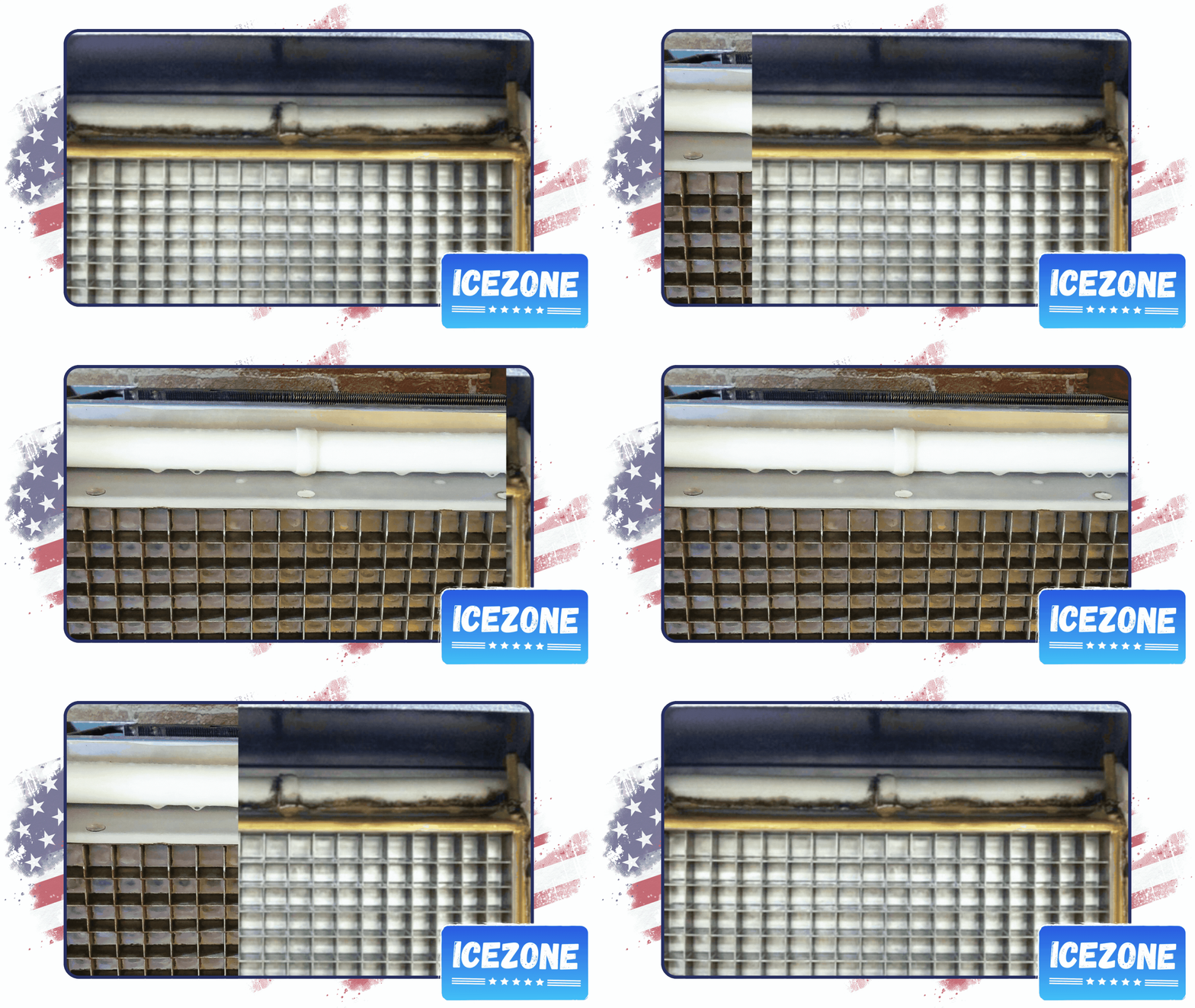
The Results: Less Scrubbing, Better Hygiene
The impact showed up quickly.
Within weeks, machines were staying cleaner for longer—and maintenance became faster and easier.
After three months:
Microbial levels dropped significantly
One location recorded cleaner results than baseline—even without extra cleaning
Deep scrubbing was replaced by quick, simple wipe-downs
Only minor adjustments were needed to optimize coverage
What This Means For Operators
This wasn’t just a cleaning improvement—it was an operational shift.
With Icezone™, the coffee chain achieved:
Continuous sanitation, not just periodic cleaning
Reduced labor and less downtime
Longer-lasting equipment
More consistent hygiene across locations
A chemical-free, more sustainable approach
Most importantly, cleanliness no longer depended on staff time or cleaning schedules—it became automatic.
Conclusion: A Smarter Standard For Ice Machine Hygiene
Manual cleaning still matters, but it can’t do the job alone anymore.
This case shows how adding continuous, automated sanitation can transform ice machine maintenance, reducing workload while raising hygiene standards.
For operators wondering how often to clean their ice machines, the answer is evolving: It's not just about cleaning more often - it's about staying clean.